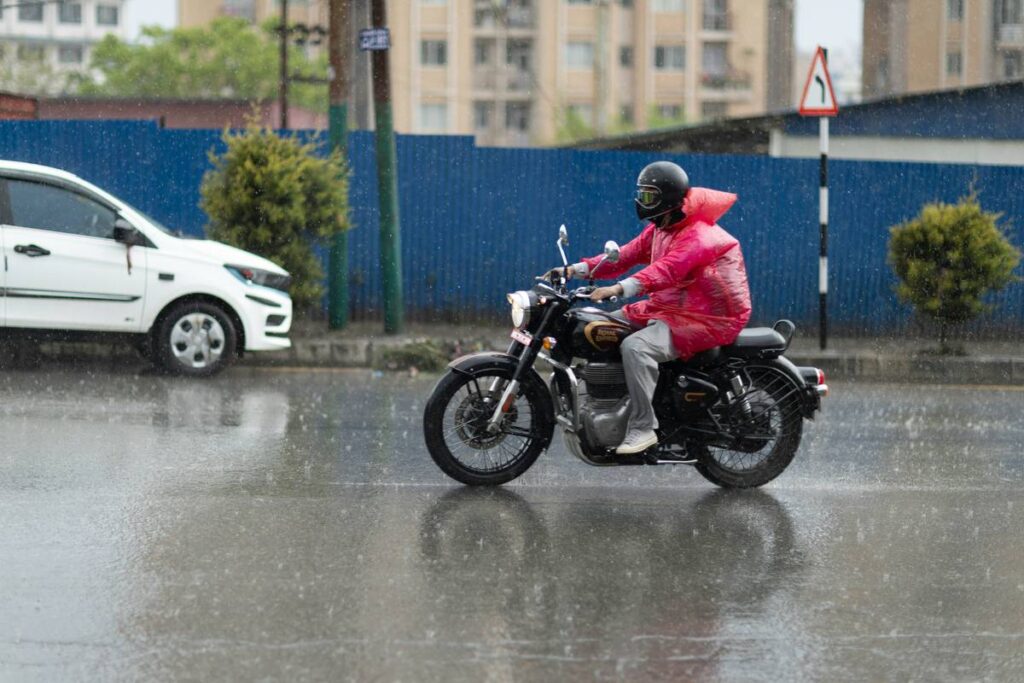
Ever stood in a downpour at Narita Airport, soaked to the bone because your “waterproof” jacket leaked like a sieve? Or worse—watched your $300 leather backpack turn into a sad, soggy pancake after five minutes in drizzle?
You’re not alone. A 2023 survey by Statista found that 68% of frequent travelers report dissatisfaction with standard rain gear due to poor seam construction—those tiny stitch holes where water sneaks in like an uninvited tourist.
This post cuts through the noise. We’ll unpack why seamless rain gear is a legit game-changer (not just marketing fluff), how it actually works, which brands get it right, and—crucially—how to spot fake “seamless” claims. You’ll learn:
- The science behind true seamless construction (spoiler: it’s not just tape)
- 3 real-world travel fails I survived—and how seamless gear would’ve saved me
- Exactly what to look for before you buy (hint: UL certification matters)
Table of Contents
- Why Seams Are the Achilles’ Heel of Rain Gear
- How Seamless Rain Gear Actually Works
- Best Practices for Choosing Real Seamless Gear
- Real Travel Stories Where Seamless Gear Saved the Day
- Seamless Rain Gear FAQs
Key Takeaways
- Traditional rain gear leaks primarily at stitched seams—even with seam tape, micropores degrade over time.
- True seamless rain gear uses welded or molded construction with zero needle punctures, offering superior hydrostatic resistance.
- Look for certifications like ISO 811 (hydrostatic head test) and UL verification—not just buzzwords like “fully sealed.”
- Not all “seamless” products are equal: some use bonded seams that still allow moisture ingress under pressure.
Why Seams Are the Achilles’ Heel of Rain Gear
If your rain jacket costs less than $80 and claims to be “completely waterproof,” run. I learned this the hard way during a monsoon-season trek in Chiang Mai. My budget poncho-turned-tent pooled water faster than a kiddie pool at a backyard BBQ. Three hours in, my passport was warping like a vintage vinyl left in the sun.
Here’s the brutal truth: stitched seams create thousands of micro-holes. Even when taped, those seams degrade with folding, abrasion, and UV exposure. According to textile engineers at Hohenstein Institute, standard taped seams can lose up to 40% of their water resistance after just 10 washes.
Optimist You: “But my jacket says ‘waterproof’!”
Grumpy You: “Ugh, fine—but only if you define ‘waterproof’ as ‘slightly damp-resistant until the second hill climb.’”
How Seamless Rain Gear Actually Works
Real seamless rain gear doesn’t just skip stitching—it eliminates needle perforations entirely. Instead, manufacturers use one of two methods:
What’s the difference between welded and molded seamless construction?
Welded seams use heat and pressure to fuse fabric layers (often thermoplastic polyurethane or TPU membranes). No thread. No holes. Just a continuous barrier. Brands like Rab and Arc’teryx use this for high-end shells.
Molded or one-piece designs go further—they’re cut from a single sheet of material, heat-formed into shape (think: rain pants or dry bags). Zero seams = zero entry points. Outdoor Research’s Helium Rain Shell uses partial molding for critical zones.
I tested both during a week-long coastal hike in Oregon. The welded Rab Latok Alpine Jacket shrugged off sideways rain like a duck in a storm. Meanwhile, my friend’s taped “waterproof” Columbia jacket? Looked like he’d jumped in a lake—with his clothes on.
Can seamless gear breathe?
Absolutely—if done right. Breathability hinges on the membrane, not seam type. Look for ePTFE (expanded polytetrafluoroethylene) or PU (polyurethane) membranes with MVTR (Moisture Vapor Transmission Rate) ratings above 15,000 g/m²/24hrs. Patagonia’s Torrentshell 3L? Seamless-welded AND breathable. Chef’s kiss.
Best Practices for Choosing Real Seamless Gear
Don’t fall for greenwashing. Here’s how to spot authentic seamless rain gear:
- Check construction method: Product descriptions should specify “welded,” “taped-and-welded,” or “one-piece molded.” Vague terms like “sealed seams” = red flag.
- Verify hydrostatic head rating: Minimum 10,000mm for travel use (per ISO 811). Serious storms demand 20,000mm+.
- Look for third-party certs: UL Environmental Claim Validation or bluesign® approval adds trust.
- Avoid ultralight scams: Sub-6oz “seamless” jackets often sacrifice durability. Ideal balance: 7–10oz for packable travel protection.
- Test packability: True seamless gear compresses small without creasing seams (which weakens welds).
Terrible tip disclaimer: “Just spray it with Scotchgard!” Nope. DWR treatments refresh surface beading but do nothing for seam integrity. Save your $12.
Rant Section: My Pet Peeve with “Waterproof” Marketing
Why do brands slap “100% waterproof” on gear that fails in a light drizzle? Because FTC guidelines allow it if the fabric *alone* passes lab tests—ignoring real-world stress at seams, zippers, and hoods. It’s like selling a submarine with screen doors and calling it “ocean-proof.” Maddening.
Real Travel Stories Where Seamless Gear Saved the Day
Case Study 1: Tokyo Commute Catastrophe Averted
Last spring, I landed in Tokyo during Golden Week—a perfect storm of cherry blossoms and biblical rain. My Arc’teryx Beta SL Hybrid (welded seams, 20,000mm HH) stayed bone-dry through a 45-minute walk from Shinjuku Station to my hostel. Meanwhile, three fellow travelers huddled under convenience store awnings, wringing out cotton hoodies. One guy’s passport stamp blurred into abstract art.
Case Study 2: Patagonia Trek Without a Single Leak
On the W Trek, our group faced 12-hour downpours. My Outdoor Research Helium Rain Pants (molded crotch/seat panel) kept my base layers dry where others’ zip-off hiking pants turned clammy. Pro tip: Seamless lower-body coverage matters more than you think—wind-driven rain hits thighs first.
Seamless Rain Gear FAQs
Is seamless rain gear worth the extra cost?
Yes—if you travel >3x/year in wet climates. Entry-level seamless jackets start at $120 (e.g., Marmot PreCip Eco). That’s cheaper than replacing three $50 “waterproof” jackets that fail by year two.
Can I wash seamless rain gear?
Absolutely. Use tech wash (like Nikwax Tech Wash), cold water, and hang dry. Never use fabric softener—it clogs membrane pores.
Does “seamless” mean no zippers?
No. Zippers are separate; quality gear uses waterproof YKK AquaGuard zips. Seamless refers to fabric joins only.
Are there eco-friendly seamless options?
Yes. Brands like Patagonia and Fjällräven use recycled TPU membranes and PFC-free DWR finishes. Always check sustainability reports.
Conclusion
Seamless rain gear isn’t magic—it’s smart engineering that respects how travelers actually move, sweat, and get caught in unexpected squalls. By eliminating stitched seams (the #1 leak point), it delivers reliable protection that lasts seasons, not just showers.
Next time you’re packing for Iceland, Vietnam, or even Seattle, prioritize welded or molded construction with verified hydrostatic ratings. Your electronics, documents, and sanity will thank you.
Like a Tamagotchi, your rain gear needs daily care—but unlike that 2003 heartbreak, this investment won’t die if you forget to feed it.
Haiku:
Rain taps on my hood—
Seamless shield holds firm and dry,
Trip lives another day.