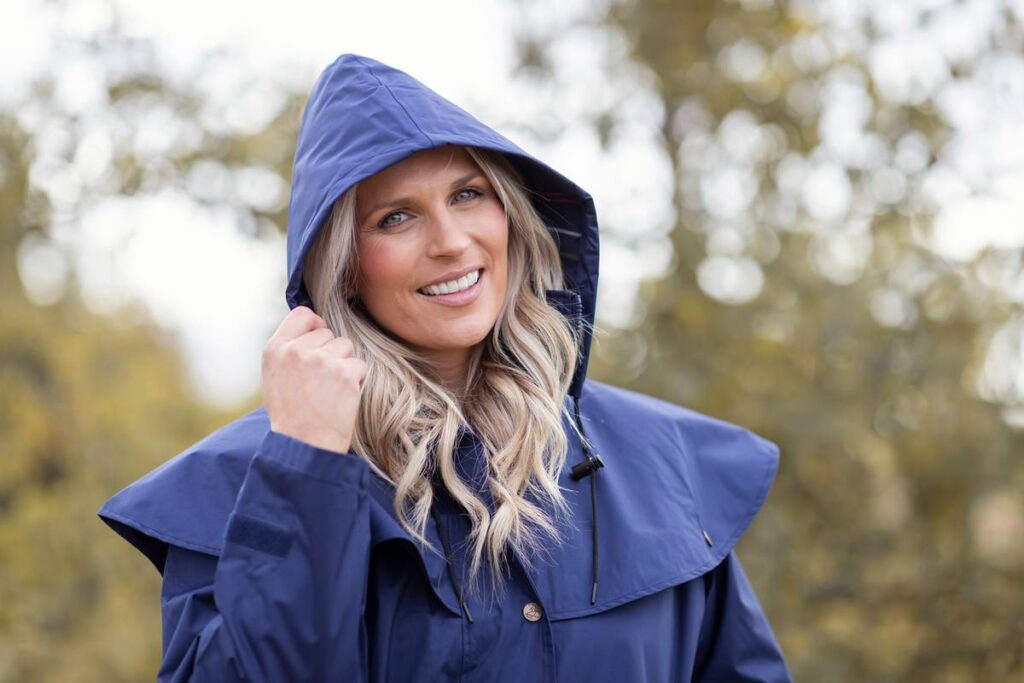
You’re hiking through misty trails or commuting in a downpour—and your rain jacket traps sweat like a greenhouse. You stay dry from the rain, sure. But you’re soaked from the inside out. That clammy, sticky feeling ruins the experience. The solution? Anti-sweat rain jackets engineered for breathability without sacrificing waterproofing.
Why Traditional Rain Jackets Make You Sweat Like Crazy
Standard waterproof shells use coatings or laminates that block water—but also lock in heat and moisture vapor. Your body produces up to 0.8 liters of sweat per hour during moderate activity. If that vapor can’t escape, it condenses on the inside lining. You’re not just wet—you’re marinating.
And most brands won’t admit this: “Waterproof” often means “water-resistant under lab conditions.” Real-world movement, humidity, and temperature swings expose the flaw. A jacket rated 10,000mm might keep rain out—but your own biology defeats it.
How to Choose (and Use) Anti-Sweat Rain Jackets That Actually Work
Pick the right tech, layer smartly, and adjust on the go. It’s not magic—it’s material science married to field-tested strategy.
Look Beyond the “Waterproof” Label
Check the breathability rating (measured in g/m²/24hr). Anything under 10,000g is borderline for active use. Top-tier anti-sweat rain jackets hit 20,000g or more. Materials like eVent, Pertex Shield+, or proprietary membranes with microporous structures let vapor out fast—without letting rain in.
Fit Matters More Than You Think
Oversized cuts allow air circulation. Skinny fits press fabric against your skin, blocking vapor transfer. And don’t ignore pit zips—they’re game-changers for dumping heat fast when you crest a hill or sprint for the bus.
Layer Like a Pro (Not a Pack Rat)
Ditch cotton base layers—they hold moisture. Go merino wool or synthetic wicking fabrics. Your mid-layer should be lightweight and compressible. Bulky fleece under a shell? Recipe for internal puddles.
| Jacket Type | Waterproof Rating (mm) | Breathability (g/m²/24hr) | Best For | Price Range |
|---|---|---|---|---|
| Basic Polyester Shell | 5,000 | 3,000 | Casual city walks | $30–$60 |
| Laminated 2-Layer | 10,000 | 8,000 | Weekend hikes | $80–$150 |
| Anti-Sweat Rain Jackets (3L eVent/Pertex) | 20,000+ | 20,000+ | Alpine treks, daily commuters, tropical travel | $180–$350 |
| Ultralight Packable | 7,000 | 5,000 | Emergency use, fair-weather travelers | $50–$100 |

The Industry Secret No One Talks About
Most outdoor brands test waterproofing in static, cool labs—never in 90°F humidity with a user moving at 3 mph uphill. Reality check: condensation inside your jacket isn’t always from poor breathability. Often, it’s from over-layering or failing to ventilate early. But here’s the real insider tip: some “anti-sweat” jackets use hydrophilic membranes that absorb and redistribute moisture instead of pushing it out. They feel dry longer—but eventually saturate and stop working. True performance comes from microporous membranes that actively expel vapor. Ask the brand: “Is your membrane hydrophobic or hydrophilic?” Their answer tells you everything.
Frequently Asked Questions
Do anti-sweat rain jackets work in tropical climates?
Yes—if they have high breathability ratings (20,000g+) and features like mesh-lined vents. Avoid coated fabrics; go for 3-layer constructions.
Can I wash my anti-sweat rain jacket?
Absolutely. Use technical detergent (no fabric softener!) and reapply DWR treatment every 3–5 washes to maintain water beading.
Are expensive anti-sweat rain jackets worth it?
If you’re active in wet conditions regularly—yes. Cheap jackets trap sweat; premium ones manage moisture dynamically, keeping you truly dry inside and out.